Will Electric Cars Mark The End Of The SUV?

Electric cars have actually been around since the 1800s, although it’s only in the last few decades that they’ve really become a thing. Their popularity has been booming quite significantly recently, with global sales up 62% in the first half of 2022 compared to the same period in 2021. Can we expect a similar increase in 2023, especially with growing concerns about the impact of traditional fuel cars on the planet?
It’s perfectly possible, which is probably not what SUV manufacturers want to hear. After all, as the demand for electric vehicles increases, the need for other cars diminishes. While some models can potentially be converted to electric, not all of them may be able to make the switch. According to the CEO of Citroen, that means bad news for fans of the SUV.
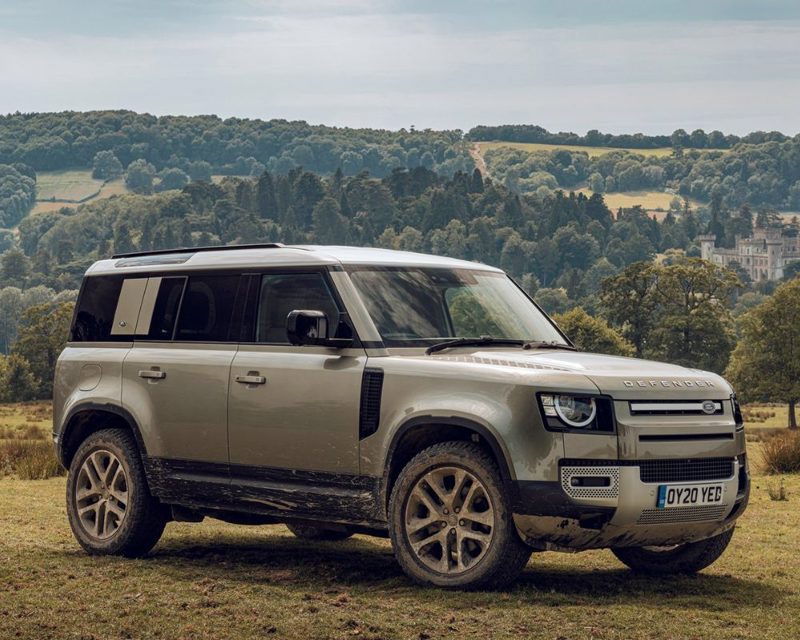
Car sales don’t seem to support the notion that SUVs are old news
Vincent Cobée seems very adamant about the future of SUVs, judging by a recent quote from the Citroen CEO. According to him, “The world of SUVs is done.” So, should manufacturers just give up on making these vehicles if they’re supposedly on the way out? Perhaps not, as Cobée did also admit that the “numbers are not telling me I’m right.” SUV sales have continued to be popular in recent years, with these vehicles accounting for 50% of new car registrations in Europe. However, the Citroen CEO remains firm in his stance that SUVs are living on borrowed time. So, what are drivers supposed to believe?
Vincent Cobée anticipates certain enforced limitations ultimately ending the SUV
According to Vincent Cobée, one reason why SUV sales continue to be high is because of the type of vehicles actually being classed as SUVs. He points out that a lot of saloon cars are being referred to as SUVs because they’re slightly higher than a typical car. In the CEO’s eyes, these vehicles are actually better suited for the driver of tomorrow because of their aerodynamics. For an SUV to be as efficient, manufacturers might have to look for solutions like increasing the battery size. However, Cobée anticipates limitations on things like car weight and battery sizes to become more prominent moving forward. Whether that be through taxes, regulation, or other incentives, it doesn’t matter. As soon as these come in, it could quickly put an end to these vehicles.
Changing perceptions about the climate could guilt people out of driving SUVs
Of course, if such limitations were enforced, that doesn’t mean they would be responsible for getting rid of SUVs for good. However, that’s because something else might do the job first. Vincent Cobée is very aware of how perceptions towards certain vehicles are changing. While the world may be filled with plenty of climate deniers, more and more people are becoming concerned about their potential impact on the planet. It wasn’t that long ago that someone seen driving an SUV was viewed in a positive light. Now, though, an increasing number of people apparently look down on such drivers. If these perceptions start to dominate mainstream ideology, there will be a lot of people who suddenly feel very guilty about owning an SUV.

Vincent Cobée is focused on working towards a fully electric future for Citroen
Given that Vincent Cobée has very clear expectations about the future of SUVs, it’s perhaps no surprise that his plans for Citroen don’t seem to focus on these vehicles. While other manufacturers continue to meet the demand of today’s consumer, Citroen will be focusing on producing cars that can run efficiently on smaller batteries. The company is gradually transitioning towards a fully electric future, as evidenced by the Oli concept. So, this is a move that better helps with the company’s aim. It’s a decision that the CEO appears to have confidence in, but is he potentially making a mistake by writing off SUVs at this time?
Citroen’s desire to move away from manufacturing SUVs is a risky move
There are certainly some concerns that Citroen’s view of the SUV situation could come back to bite them. After all, demand for these vehicles is evidently still high right now. So, with the manufacturer opting to move away from manufacturing them, their profits could suffer. However, this is a risk that Cobée is willing to take because of his belief about what the future holds. He also apparently thinks it would be a riskier move to stay committed to SUVs until, say, 2030, only to find the customer base is gone. Then, the losses will come from having a bunch of stock the company can’t sell. As the CEO himself said, “you don’t want to be the last one to leave the dancefloor.”
Electric vehicles continue to grow in popularity, but there’s still a way to go before they become the dominant force on our roads. Evidently, though, they’re already having a major impact on the way that car manufacturers think about their future plans. Their existence could ultimately spell the end of SUVs, but we’ll have to wait to see if that’s how things actually pan out.
You May Also Like
 Finance
How to Build a Watchlist Without Chasing Hype
 Finance
Why Market Timing Is So Tempting
 Finance
FOMO Trades and How They Start