These Are The States Rising Wages With Inflation
The cost of living, inflation, and the impending wonder of whether or not there will be a recession are all things that have kept plenty of us up at night throughout 2022. Although many continue to work their way through the struggle, plenty are unhappy with the way they are treated - and paid - by their employers.
Thankfully, it appears that some areas of the nation are starting to listen to their workers, as these are the states rising wages with inflation. Still, there might be a long way to go before everyone has a paycheck that matches the rising cost of living across the US.
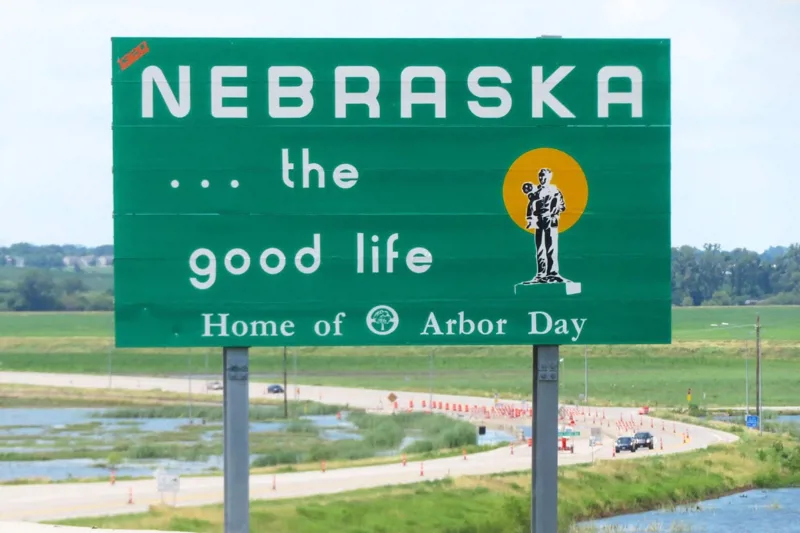
Nebraska will see the biggest increase in wages
When it comes to the states rising wages with inflation, Nebraska appears to have blown everyone else out of the water. That’s because the state plans to raise the minimum wage from $9 an hour to a staggering $15 in the next few years. This will come in increments, hitting $10.50 in 2023, $12 in 2024, $13.50 in 2025, and $15 in 2026. By then, new plans that are set to be put in place should mean that someone’s wages are in line with the consumer price index (CPI) moving forward, meaning wages could increase as much as 8% in some years.
Nevada will likely remove a tie to CPI
Every state has its own way of determining minimum wage. Although Nevada has agreed to raise the minimum wage, the state is also looking to remove a clause that ties someone’s pay to the CPI. Still, this is already limited to just 3% and doesn’t always match the changing world. Whatever the case, it could mean that wages go from a minimum of $9.50 and $10.50 per hour, depending on whether or not you have health benefits, to a flat $12 per person. It will also remove the rule that employers can pay $1 less to those who have workplace benefits, such as health insurance.

Three states already annually increase wages
It turns out the idea of states rising wages with inflation is nothing new. In fact, four states already do just that to keep in line with the CPI. These are none other than Ohio, Montana, and Maine, where people are used to an annual increase in the rising cost of living.
Vermont’s way of raising wages with inflation might need to change
Just because Vermont already raises its minimum wage with the CPI doesn’t mean that it’s entirely like other options on the market. That’s because the state either raises the minimum wage by 5% or the CPI percentage, depending on which is smaller. That means that even though inflation soared well above 5% in 2022, people in Vermont didn’t quite have a paycheck to match the increase.
Three states plan on adjusting their wages to meet CPI
Listening to workers means that plenty of states have learned what they need to do to give people the funds they need to live a healthy life. Three of those are Oregon, California, and New Jersey. Here, it’s said that the states will all start to use the CPI to figure out just how much people should be paid for their work. Oregon and California allegedly plan to bring this in by 2023, while New Jersey is currently said to be waiting until 2025.

Washington D.C. will increase tipped workers’ wages
One of the biggest things to come for workers from the latest round of voting is how much of a positive effect the changes will have on tipped workers in Washington D.C. For years, the minimum wage for people working in industries that predominantly rely on tips for income can receive just $5.35 an hour. However, if their pay falls below minimum wage, an employer must make up the difference. Now, new rules mean that the wage is set to increase steadily over the years before reaching $16.10 per hour by 2027.
The states rising wages with inflation could be all the inspiration many others need to set about making their own changes. While it won’t stop the cost of everything else from going up, having more money to play with in the first place could make all the difference to those working for companies.
You May Also Like
 Finance
How to Build a Watchlist Without Chasing Hype
 Finance
Why Market Timing Is So Tempting
 Finance
FOMO Trades and How They Start