Why Are Nintendo's Switch Sales Continuing To Fall?

At the start of 2017, Nintendo was in a somewhat precarious position. Their last console had become one of their worst-performing ever, raising questions over whether they still had the ability to create best-selling hardware. Then, they released the Switch and proved that they could come back from one of their lowest lows with one of their highest highs.
Over six years later, it’s now one of the most beloved consoles that Nintendo has ever released. Unfortunately, that doesn’t mean that sales are what they used to be. In its last fiscal year, the company reported a drop in profit, with Switch sales below their predicted forecast. With the next forecast even lower, why are Nintendo’s Switch sales continuing to fall? Is it anything to be concerned about?
Nintendo’s sales and revenue saw a noticeable decline last fiscal year
To some, shifting 17.97 million units of a console might seem like a great achievement. Considering that the Wii U’s lifetime sales were reportedly just 13.56 million, it’s a significant improvement on the past. However, when you compare Switch’s sales from the last fiscal year to those that came before, it paints more of a grim picture. This figure is the lowest in four years, with sales peaking at close to 29 million two years ago. What’s more, it marks a decline for the second year in a row, with the sale of 17.97 million units quite a drop from last year’s 23.06 million. To make matters worse, the company’s reported revenue in this period was 1.6 trillion yen, which currently equates to over $11.8 billion. While that might have lined up with Nintendo’s prediction, it also marked a 5.5% year-on-year decline. Even its net profit - which exceeded their forecast - was down 9% year-on-year.
Shortage of parts and a poor holiday season reportedly affected sales
Over the last few years, several gaming companies have struggled to generate the sales they wanted with their consoles. Availability of the PlayStation 5 was extremely limited for more than a year due to supply chain issues and a semiconductor chip shortage. The latter also reportedly affected Nintendo, with the company partly blaming this problem for the sharp decline in sales for the Switch. Such shortages apparently “impacted production until around the end of summer” last year, leaving them unable to meet the demand that was there. Unfortunately, it seems as though this demand might have waned by the end of the year, with Nintendo also saying that the holiday season didn’t play out as expected. The sales growth they’d seen in this period the year before was not present at the end of 2022, hurting tier sales further. Cost of living crises affecting many parts of the world may have had a hand in this.
A drop in sales was likely always in the cards
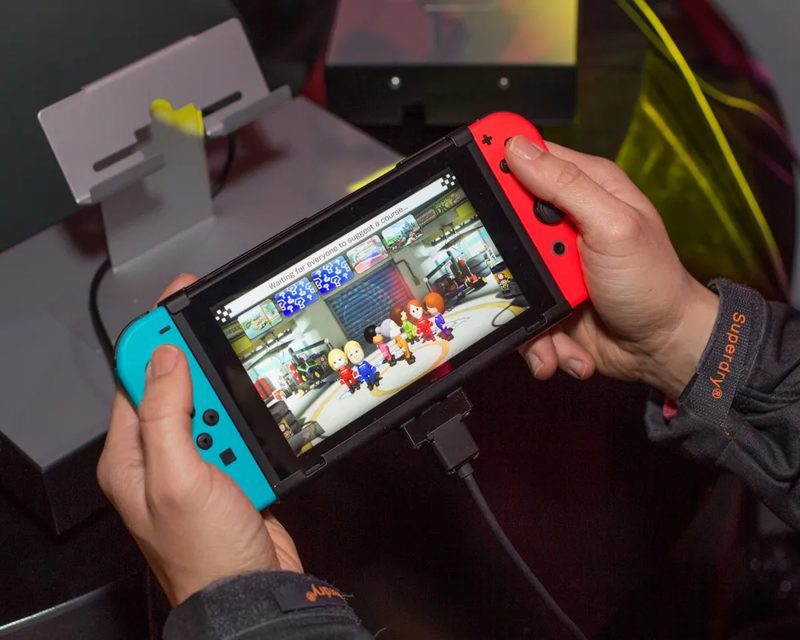
A drop of over ten million in console sales across two years isn’t great, and neither is Nintendo’s failure to generate a profit. However, it’s worth pointing out that what’s happening right now was always a likely scenario. The Switch is now in its seventh year, and usually, by this point, the next generation of consoles would have come along to replace it. Some people who might be interested in it may well be waiting to buy its successor instead, which could arrive as soon as next year. What’s more, while sales might be dropping, it’s not like the console has failed to generate huge numbers since its release. Nintendo’s own DS and the PlayStation 2 are now the only consoles to have sold more units during their lifetime than the Switch. Plus, the company has reportedly achieved more software sales with this console than they ever have before, so it’s clear that it’s done an excellent job over the years.
At this point, many people who want to own a Switch have one, so it’s inevitable that sales are going to be in decline. What’s more, with Nintendo’s first-party software for the next year looking a little sparse, another drop in sales should probably be expected. However, with a new console waiting somewhere around the corner, we doubt Nintendo is panicking too much about how the Switch is faring right now.
You May Also Like
 Finance
How to Build a Watchlist Without Chasing Hype
 Finance
Why Market Timing Is So Tempting
 Finance
FOMO Trades and How They Start