What Does France's Retirement Age Change Mean For Everyone Else?

For many around the world, the idea of winding down work and taking things slower is still a long way off. After all, many of us will spend most of our lives building a career and saving away for our later years. Still, that doesn't mean we should forget about retirement or what it could mean when it finally rolls around. The problem? The official age we officially start claiming our government-given pension is constantly changing - and it differs from country to country.
One nation that's found itself in the middle of a complete storm right now is France. President Emmanuel Macron unilaterally opted to alter the retirement age for people living in the nation in March, and it looks as though French citizens are less than impressed with the news. What does France's retirement age change mean for everyone else? It turns out it could have more of an effect than many realize.
President Macron's retirement age change was met with plenty of backlash
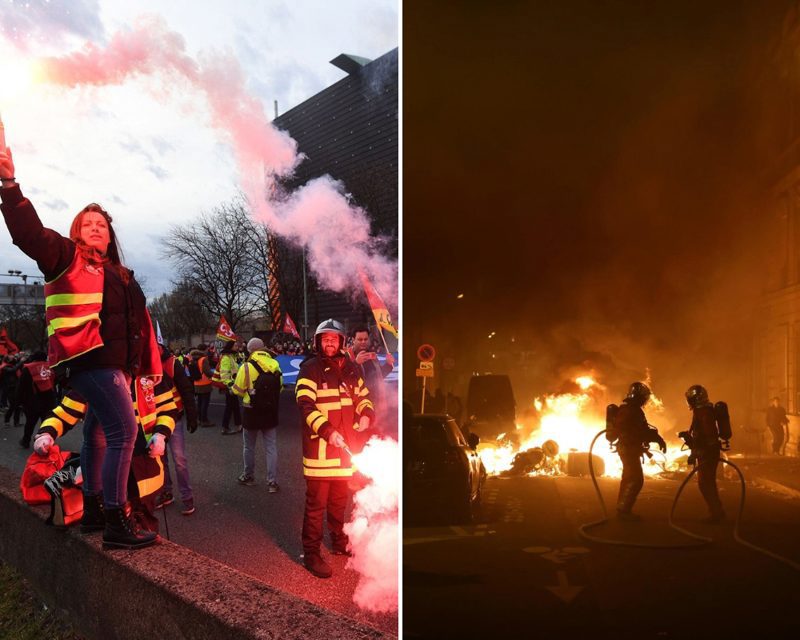
Whenever there is major change to the law, there will always be backlash. That was the case for President Emmanuel Macron, who changed the law surrounding France's retirement age without backing from the rest of the country. Before the change, the retirement age in France was 62 years old. Now, that has been raised to 64, with workers across the country protesting and going on strike in a bid to slow down the change. Although their efforts were ultimately in vain, it hasn't stopped outrage across France, with violence and protests cropping up everywhere.
France's retirement age is still lower than most other countries
Just because France's retirement age has risen, that doesn't mean they have to retire after everyone else in the world. In fact, the age is still a lot lower than plenty of the nation's neighbors. In the US, the average age that women retire is 64.7 years old, with men sitting at 64.9 years old, but both can claim benefits from 62 years old. Indonesia is the nation with the highest average retirement age, sitting at 68 years old, with Sauids returning on average well before they turn 60 years old. Across the rest of Europe, the average retirement age sits around 65 years old.
Each nation offers its own retirement age and age to claim benefits
Of course, there are no set rules about when a country has to offer retirement. Each country has its own retirement age and age to claim benefits, with people in Canada being able to opt for early retirement from as young as 60 years old, with standard retirement coming five years later. Israel is a little different, with women able to claim a state pension from 62 years old and men cashing in at 67 years old. Mexico also offers early retirement at 60 years old, but differing retirement plans mean people have to wait until they're 65 to 68 years old to claim their full pension.

France's president hopes to boost the country's economy with the change
Why has France's president raised the retirement age? That is all because President Macron wants to try and boost the nation's economy. A lot of upset has been seen across the financial market in the last few years, and many governments are hoping to do anything they can to get things back on track. According to Macron, he wants to make France's economy more competitive in a bid to keep people working for longer.
France has long been the one with a declining average retirement age
For years, France has seen early retirement from as early as 55 to 62 years old. Regular retirement is a little later, at 63.5 to 64.5 years old, with the average retirement age actually steadily decreasing since the 1970s. It's a trend that France wants to see continue, especially as other nations have been increasing their age of retirement in the years they have been taking a step back. As if all of that wasn't enough, a lot of the backlash comes from Macron's proposal that people would have to wait until 67 years old to collect their full pension if they haven't been working for at least 43 years by the time they retire.

Other nations might soon be forced to look at their own retirement policies
What does France's retirement age change mean for everyone else? It could force other people to rethink their retirement ages. For example, the US has seen the retirement age increase over the years, with plans to raise things even further often coming into the cards. The nation also faces an aging population which may force their hand. The problem? Right now, the US offers pensions from the United States Social Security fine - with a projection estimating it will fully run out of money by 2034 if nothing changes.
What does France's retirement age change mean for everyone else? While it doesn't directly affect other nations, the new laws could see other countries look at their own retirement funding plans and ages to see if things need to change.
You May Also Like
 Finance
How to Build a Watchlist Without Chasing Hype
 Finance
Why Market Timing Is So Tempting
 Finance
FOMO Trades and How They Start